Plumber Near Me: Why State Licensing Should Be on Your Checklist
When people search for a plumber near me, they are usually not in a leisurely mood. A pipe is leaking under the sink. The water heater quit before guests arrive. A clogged line is backing up into a shower. In a commercial building, a plumbing issue can interrupt business within minutes. Under that kind of pressure, many homeowners and property managers focus on one thing first: who can get here fastest.
Speed matters, but licensing belongs near the top of the checklist, especially in Hawaii.
That is not a technicality. It is a practical filter that helps you separate legitimate plumbing professionals from people who are simply willing to take the job. In Hawaii, plumbing is a licensed profession. A person may not act as a plumber, or present themselves as one, without a license. Plumbing work generally must be performed by a licensed journey worker plumber or master plumber, with apprentices and helpers working under supervision. That legal framework exists for a reason. Plumbing touches water supply, wastewater, fixtures, drainage, and in some cases systems that can damage property quickly when installed or repaired poorly.
If you are looking for a plumber Kona homeowners can trust, or trying to hire a commercial plumber for a larger project, licensing is not a box to check after the fact. It should shape the conversation from the first phone call.
Why licensing matters more than many people realize
A lot of tradespeople are handy. That is not the same thing as being legally qualified to perform plumbing work.
Plumbing looks deceptively https://jsbin.com/?html,output simple from the outside. A faucet drips, a toilet runs, a drain slows down. Yet behind those symptoms are systems that depend on correct materials, code knowledge, proper venting, safe connections, and workmanship that will hold up under daily use. A repair that appears to work on day one can become a much larger problem after a week, or after the next heavy usage cycle.
State licensing matters because it creates a baseline. In Hawaii, the state requires plumbing work to be done by licensed plumbing professionals, and it ties contractor oversight to the requirement that plumbing contractors employ licensed plumbers to perform the actual work. That distinction is important. A company name on a truck is not enough by itself. The actual person doing the work matters.
This is where many consumers get tripped up. They assume that if a business advertises plumbing services, the person arriving is necessarily a licensed plumber. That may or may not be true unless you ask. In a regulated trade, asking is not rude. It is part of hiring responsibly.
Hawaii’s rules are especially relevant when the job feels urgent
People often become less careful when a problem feels like an emergency. That is understandable. If water is running where it should not be, or a fixture has failed at the worst possible time, most people want a fast fix and fewer questions.
Hawaii law does recognize a narrow exception for limited emergency plumbing repair work in a person’s principal residence. But that exception is not broad, and this is where assumptions can get expensive. It does not apply to sewer lines, drains, gas lines, or certain fixtures such as heaters and water closets.
That means some of the very issues people commonly treat as urgent, like drain problems, sewer line trouble, and water heater issues, are exactly the kinds of jobs where the emergency exception does not give someone free rein to operate as an unlicensed plumber.
This matters in real life. Suppose someone searches for an emergency plumber late at night because a water heater has failed or a drain line is backing up. The stress of the moment can make any available help sound good. But under Hawaii’s rules, those categories deserve extra caution, not less. If the job involves water heater repair, drain cleaning, sewer line repair, or another system outside that narrow emergency exception, licensing becomes even more important.
The phrase “plumber near me” should trigger better questions
Search terms are convenient, but they can flatten important distinctions. A search result for plumber near me might include businesses offering everything from minor residential repairs to large-scale commercial plumbing installation. It may also include companies that market aggressively without giving a clear picture of who is actually doing the work.
A better approach is to treat your search as the beginning of screening, not the end of it.
Before scheduling, ask who will perform the work and whether that person is a licensed journey worker plumber or master plumber. If the company uses apprentices or helpers, ask how supervision is handled. Hawaii’s licensing structure allows apprentices and helpers to work under supervision, but it does not erase the need for licensed plumbing professionals to perform and oversee the work properly.
That conversation tells you a great deal. A legitimate company should be able to answer clearly and without defensiveness. Vague answers are worth noticing. So are attempts to redirect the conversation toward price before clarifying who is qualified to do the job.
Licensing is about risk management, not paperwork
A good plumber earns trust through workmanship, communication, and judgment on site. Licensing does not guarantee perfect work any more than a driver’s license guarantees perfect driving. But it does tell you the person is operating within a regulated system rather than outside it.
That matters because plumbing failures are often cascading problems. A small installation mistake can create hidden leakage. A bad drain connection can lead to recurring backups. An incorrect repair on a water heater can leave you paying for the same service twice. When the system involved is part of a home’s wastewater setup, the stakes can become broader still. Hawaii’s wastewater guidance notes that some property wastewater projects may also require a licensed plumber and or electrician, depending on scope. In other words, there are situations where plumbing work connects to other regulated systems and approvals. That is not a good place to improvise.
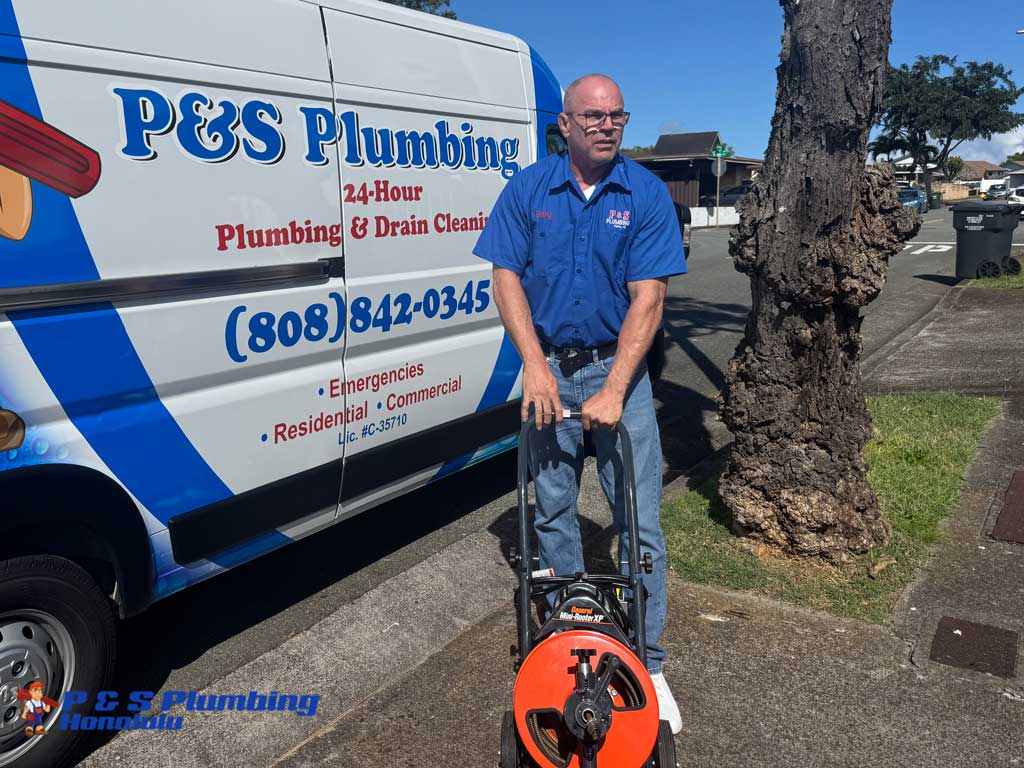
For a homeowner, licensing reduces the chance that the person on site is guessing. For a property manager or business owner, it helps protect the building, the occupants, and the continuity of operations.

What this looks like in everyday service calls
In West Hawaii, business listings show plumbing providers advertising a familiar range of services: residential plumbing, commercial plumbing installation, drain cleaning, sewer line repair, water heater repair and installation, leak detection, and solar water heating work. Those are not fringe specialties. They are common calls.
That is exactly why licensing deserves attention. The most routine-looking jobs are often the ones consumers underestimate.
Take drain cleaning. People often think of it as a simple service, the plumbing equivalent of a quick reset. But Hawaii’s limited emergency exception does not apply to drains. If you are hiring someone to clear a blocked line, licensing is not a side issue. It is central.
The same goes for sewer line repair. Sewer work can affect sanitation, property condition, and how wastewater leaves the building. It is not a category where “my neighbor knows a guy” is a smart procurement strategy.
Then there is water heater repair. Water heaters sit at the intersection of convenience and urgency. When they fail, people move fast because no hot water disrupts the whole household. But Hawaii’s exception specifically does not extend to heaters. If someone is offering water heater repair, their licensing status should be part of your decision before any work starts.
The same practical reasoning applies to solar water heater repair. In areas where solar water heating is common, the equipment may be familiar to local companies, but familiarity should not be confused with qualification. If a business offers solar water heating services, ask the same direct questions you would ask for standard water heater work.
A short checklist that can save you trouble
Use these questions before you hire, whether the job is urgent or routine:
- Is the person performing the plumbing work a licensed journey worker plumber or master plumber in Hawaii?
- If apprentices or helpers are involved, how will licensed supervision be handled on this job?
- Does the company understand that certain emergency exceptions are limited and do not cover drains, sewer lines, gas lines, heaters, or water closets?
- If the work touches wastewater systems or related property infrastructure, are there additional licensed trades needed based on the scope?
- For larger projects, especially commercial plumbing installation, who is responsible for code-compliant execution on site?
This is not an adversarial script. It is a practical hiring conversation. Solid companies usually welcome informed clients because clear expectations make jobs run more smoothly.
Continuing competency is not a minor detail
One of the most overlooked advantages of hiring licensed plumbing professionals is that licensing is not always a one-time event. In Hawaii, plumber license renewals for the current cycle ending June 30, 2027 require continuing competency in the 2021 Uniform Plumbing Code.
That requirement says something meaningful about the state’s approach. Plumbing standards do not stand still forever. Codes evolve. Best practices are refined. Materials and methods change. Requiring continuing competency helps keep licensed professionals connected to the rules they are expected to follow.
From a customer’s point of view, this matters because it shifts the conversation from “Can this person physically tighten a fitting?” to “Is this person operating within a system that expects current code knowledge?” Those are very different standards.
If you are comparing bids and one provider seems irritated by questions about licensing while another answers them matter-of-factly, the second conversation is usually the better sign. Professional plumbing work is not just manual labor. It is regulated, technical work performed within standards that change over time.
The difference is even sharper on commercial jobs
Homeowners often think about licensing when there is a leak or a fixture problem. Commercial clients need to think about it from the start of planning.
A commercial plumber may be handling tenant improvements, fixture installation, utility tie-ins, repairs that affect business hours, or broader commercial plumbing installation work. The operational consequences are different from a typical residential service call. Delays cost money. Mistakes can affect customers, staff, other tenants, and scheduling across multiple trades.
In those settings, licensing is part of due diligence. Hawaii’s contractor oversight requires that plumbing contractors employ licensed plumbers to perform the actual work. That should matter to anyone hiring for a restaurant space, retail build-out, office retrofit, or mixed-use property repair. Commercial clients do not just need a company willing to bid the job. They need confidence that the work will be carried out by people who are legally qualified to do it.
There is also a practical management reason to care. On commercial jobs, responsibilities can blur when several trades overlap. A clear, licensed plumbing team helps define accountability. When the scope includes systems that may trigger other regulated work, such as aspects of wastewater infrastructure, clarity becomes even more valuable.
Local familiarity is useful, but it does not replace licensing
Many people looking for a plumber Kona residents recommend are not wrong to value local experience. Local companies may understand common building patterns, service expectations, and the kinds of plumbing calls that come up repeatedly in the area. That can be a real advantage.
Still, “local” and “licensed” are not interchangeable. A company can know the neighborhood and still leave unanswered questions about who is performing the work. The strongest choice is often both: local familiarity and clear compliance with Hawaii’s licensing requirements.
This is worth keeping in mind because online searches can create a false sense of trust. A listing with good branding, broad service categories, and quick response promises can feel established. But polished marketing is not proof of qualification. If the work involves drain cleaning, sewer line repair, water heater repair, or solar water heater repair, the licensing question should come before the scheduling question.
When urgency clouds judgment
Most people do not make their best vendor decisions while mopping a floor. I have seen that pattern in every service trade. The customer is tired, the problem is active, and the first person who answers the phone starts to sound like the right person. That is exactly why standards matter.
The best time to think about licensing is before you need an emergency plumber. If you own a home, rental, or commercial property, it is smart to identify one or two legitimate plumbing companies ahead of time. That way, when a problem happens, you are not trying to evaluate credentials under pressure.
Here is the practical difference. When a known, properly qualified plumber shows up for an urgent call, you can focus on the scope, the immediate stabilization, and what happens next. When the licensing picture is unclear, every decision becomes shakier. Should you authorize the work? Is the issue one of the categories that falls outside the narrow residential emergency exception? Are you about to pay someone for work they should not be doing in the first place?
That uncertainty is avoidable.
What a careful customer listens for
The strongest plumbing conversations usually sound plain. No drama, no dancing around the basics, no odd reluctance to explain who will actually do the work. If you ask whether the person on site is licensed, a professional answer should be direct. If you ask about a water heater, drain, or sewer line issue, the company should understand that these are not loose categories where anyone can improvise.
A few signs tend to separate serious operators from risky ones:
- They answer licensing questions clearly and specifically.
- They distinguish between the company and the licensed individual performing the work.
- They do not misuse “emergency” language to blur legal limits.
- They recognize when a project scope may involve other regulated work.
- They treat code knowledge as part of the job, not an afterthought.
Notice that none of those signs depend on flashy promises. They are all about competence, accountability, and respect for the trade.
Why this checklist protects both small repairs and larger investments
It is easy to think licensing only matters for major projects. In practice, it protects both ends of the spectrum.
On the small end, the risk is that a quick repair turns into a repeat problem or damages adjacent areas. A poorly handled fixture, drain, or heater issue can create more downtime and more cost than the original service call. On the large end, especially with commercial plumbing installation or substantial system work, the risk expands into scheduling, occupancy, tenant disruption, and rework.
Licensing helps because it anchors the job to people who are supposed to know the applicable standards and operate within state oversight. That does not remove every risk. No hiring decision does. But it is one of the few screening tools that has both legal relevance and practical value.
That is why the phrase plumber near me should lead to a deeper question: near you, yes, but qualified under Hawaii’s rules to do the work you actually need?
The smartest shortcut is not really a shortcut
People often look for a shortcut in hiring. The closest company. The lowest number. The fastest arrival window. Sometimes those factors point to a good choice. Sometimes they point straight at trouble.
State licensing is not a bureaucratic extra to revisit later. In Hawaii, it is part of the foundation for lawful plumbing work. The state’s rules are clear that people may not simply hold themselves out as plumbers without a license. The work itself generally belongs in the hands of licensed journey worker or master plumbers, with apprentices and helpers under supervision. Emergency exceptions are limited, and they do not cover some of the very jobs people rush to solve, including drains, sewer lines, and heaters. Licensed plumbers are also working within a renewal system that currently requires continuing competency in the 2021 Uniform Plumbing Code.
That is a strong case for putting licensing on your checklist before price, before availability, and certainly before anyone starts taking things apart.
If you are hiring for a home repair in West Hawaii, searching for a plumber Kona property owners rely on, or evaluating a commercial plumber for a larger job, the principle stays the same. Ask who is licensed. Ask who will perform the work. Ask how supervision works if others are involved. Ask those questions early, while you still have the freedom to choose well.
A good plumber solves the immediate problem. A properly licensed one gives you a much better chance that the solution will hold.
Name: P&S Plumbing Kona
Address: 73-5573 Kauhola St Bay #11, Kailua-Kona, HI 96740, United States
Phone: 808-325-3892
Website: https://www.psplumbinghawaii.com/
Email: [email protected]
Hours:
Sunday: Open 24 hours
Monday: Open 24 hours
Tuesday: Open 24 hours
Wednesday: Open 24 hours
Thursday: Open 24 hours
Friday: Open 24 hours
Saturday: Open 24 hours
Time zone: Hawaii-Aleutian Time
Open-location code / Plus code: MXQJ+P4 Kailua-Kona, Hawaii, USA
Map/listing URL: https://www.google.com/maps/search/?api=1&query=Google&query_place_id=ChIJwc_thcwNVHkRhwCIvILuP8w
Embed iframe:
Socials:
https://www.facebook.com/psplumbingkona/
https://x.com/PSPlumbingKona
https://soundcloud.com/p-s-plumbing-kona
https://www.youtube.com/@PSPlumbingKonaHawaii
P&S Plumbing Kona provides plumbing services from its Big Island headquarters on Kauhola Street in Kailua-Kona.
The official website lists Kona phone service at 808-325-3892 and also lists Hilo and Honolulu service contacts.
P&S Plumbing provides residential plumbing, commercial plumbing, drain and sewer service, water heater work, plumbing repairs, leak detection, fixture repair, kitchen plumbing, bathroom plumbing, and emergency plumbing support.
The official site lists the Big Island headquarters at 73-5573 Kauhola Street, Bay 11, Kailua Kona, HI 96740.
The company’s official site lists Hawaii State License Number CT-35710 and describes P&S Plumbing as licensed and insured.
Customers can contact P&S Plumbing Kona for drain cleaning, sewer-line concerns, water heater service, clogged toilets, fixture repairs, plumbing leak detection, pipe-lining needs, bathroom remodeling plumbing, kitchen plumbing, commercial plumbing, and urgent plumbing requests.
For plumbing service in Kailua-Kona and West Hawaii, call 808-325-3892 or visit https://www.psplumbinghawaii.com/
The public map listing uses plus code MXQJ+P4 Kailua-Kona, Hawaii, USA and can help customers find P&S Plumbing Kona near Kauhola Street.
Popular Questions About P&S Plumbing Kona
What does P&S Plumbing Kona provide?
P&S Plumbing Kona provides plumbing services for residential and commercial customers, including drain cleaning, sewer and drain service, water heater service, plumbing repairs, fixture repair and installation, leak detection, kitchen plumbing, bathroom plumbing, and 24-hour emergency plumbing.
Where is P&S Plumbing Kona located?
The official contact page lists the Kona location at 73-5573 Kauhola Street, Bay 11, Kailua Kona, HI 96740. The listing address is 73-5573 Kauhola St Bay #11, Kailua-Kona, HI 96740, United States.
What phone number should Kona customers call?
The official website lists Kona phone number 808-325-3892.
What is the email address for P&S Plumbing Kona?
The email address is [email protected].
What are P&S Plumbing Kona’s hours?
The listing hours show P&S Plumbing Kona as open 24 hours a day, seven days a week, Hawaii-Aleutian Time. The official website also references 24-hour emergency plumbing service.
Is P&S Plumbing licensed?
The official website lists Hawaii State License Number CT-35710. Customers can confirm license status directly with the relevant Hawaii licensing authority before hiring.
Does P&S Plumbing Kona offer emergency plumbing?
Yes. The official website references 24-hour emergency plumbing service and emergency services availability.
Does P&S Plumbing handle water heaters?
Yes. The official website lists water heater installation and repair, including tankless, solar, conventional water heaters, and boiler setup and repair.
What areas does P&S Plumbing serve from Kona?
The official service-area page lists Big Island / Kona communities including Kona, Holualoa, Kukio, Waikoloa Village, Kalaoa, Captain Cook, Kahaluu-Keauhou, Keauhou, Kainaliu, Waimea, Puako, and Kealakekua.
How do I contact P&S Plumbing Kona?
Call 808-325-3892 or visit https://www.psplumbinghawaii.com/. Social profiles: Facebook, X, SoundCloud, and YouTube.
Landmarks Near Kailua-Kona, HI
Kauhola Street: The street listed for P&S Plumbing Kona’s Big Island headquarters and a practical reference point for the Kailua-Kona location.
Queen Kaʻahumanu Highway: A major West Hawaii route connecting Kailua-Kona, Kona International Airport, Waikoloa, and nearby coastal communities.
Ellison Onizuka Kona International Airport: A major transportation landmark north of Kailua-Kona and near local service routes.
Kailua-Kona town: A central West Hawaii community served by local plumbing contractors.
Old Kona Airport State Recreation Area: A well-known Kailua-Kona landmark near residential and commercial areas.
Kailua Pier: A central waterfront landmark in Kailua-Kona and a common local reference point.
Aliʻi Drive: A major coastal route with homes, condos, restaurants, shops, and visitor properties.
Honokōhau Harbor: A marina and commercial harbor area near Kailua-Kona and local business routes.
Kaloko-Honokōhau National Historical Park: A major cultural and coastal landmark north of Kailua-Kona.
Keauhou: A South Kona community with homes, condos, resorts, and plumbing service needs.
Holualoa: An upland Kona community with residential properties and local businesses.
Waikoloa Village: A West Hawaii community listed on P&S Plumbing’s service-area page.
Waimea: A Big Island community listed on P&S Plumbing’s service-area page.
Kealakekua: A South Kona community listed on P&S Plumbing’s service-area page.
Captain Cook: A South Kona community listed within P&S Plumbing’s Big Island / Kona service-area references.
For residential plumbing, commercial plumbing, drain cleaning, sewer-line repair, water heater service, leak detection, fixture work, bathroom plumbing, kitchen plumbing, or 24-hour emergency plumbing near these Kailua-Kona and West Hawaii landmarks, contact P&S Plumbing Kona at 808-325-3892 or visit https://www.psplumbinghawaii.com/
Corrections
Spot something wrong? Send it to the desk and it gets fixed in the open.